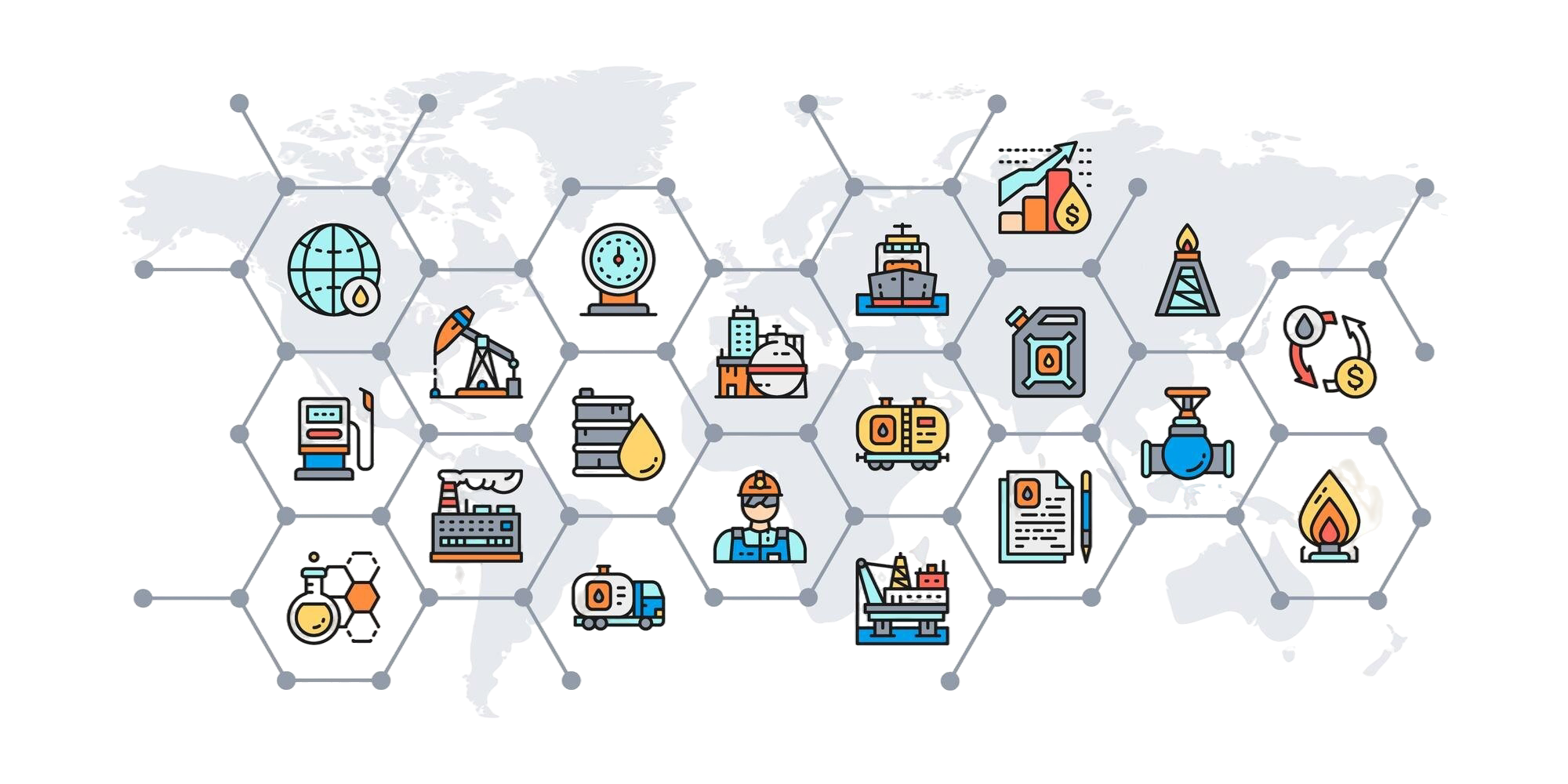
Energy

In energy, classic utility billing usually runs on SAP's utilities solution (IS-U, now S/4HANA Utilities) on top of FI-CA. SAP BRIM is typically used for newer, usage-heavy models like EV charging, dynamic tariffs, and energy services. E-invoicing matters mostly in B2B and B2G, and it overlaps with market communication between suppliers and grid operators.
Where SAP BRIM fits
- EV charging: session rating, roaming settlement between charge point operators and mobility providers
- Dynamic or time-of-use tariffs and prosumer models (feed-in, community solar)
- Subscription-style energy services (heat pumps, PV leasing, flat-rate bundles)
- Shared FI-CA foundation for invoicing, dunning, and payments, so it often coexists with the utilities billing core



B2C (households)
- Billing: Meter-based bills with advance payments, annual settlement, and price changes mid-period.
- E-invoicing: Usually not mandated, so PDF or portal bills are fine. Italy's SDI is a notable exception.
- Watch out for: Regulated bill content and itemization, energy taxes and levies, and credit notes for prosumer feed-in (often self-billing).
B2B (industrial customers, resellers, grid operators)
- Billing: Individual contracts, load profiles, capacity charges, and portfolio or multi-site invoices. Suppliers and grid operators also exchange invoices for network usage.
- E-invoicing: This is the main mandate area (EN 16931 formats such as Peppol BIS and ZUGFeRD/Factur-X, plus clearance in Italy, Poland, and France's rollout). SAP typically handles it via Document and Reporting Compliance plus a Peppol or certified provider.
- Watch out for: Market communication often uses its own formats (e.g., EDIFACT INVOIC/REMADV in Germany) that run alongside legal e-invoicing. Corrections and rebilling after meter data changes are frequent.
B2G (municipalities, public buildings, street lighting)
- Billing: Framework supply contracts, often split by building or cost center. Government relief schemes or compensation can add reimbursement invoices.
- E-invoicing: Usually mandatory structured formats (XRechnung via Peppol in Germany, Chorus Pro in France, PEF elsewhere).
- Watch out for: Routing IDs (e.g., Leitweg-ID), PO or contract references, and per-site invoicing that conflicts with consolidated billing.
Cross-cutting issues
- Convergent Invoicing and utilities billing both run on FI-CA, but e-document coverage can differ by country and release. Verify it for your scenario.
- Tax logic is complex: reduced rates, energy taxes, levies, and reverse charge for some supplies.
- Mandate deadlines keep shifting (Germany, France, Belgium, Poland, ViDA), so check current dates.
Our Solutions & Services



Finance
From Idea to Blueprint to Specifications and Implementation. We assist on every part of the solution.
Strong in:
- General Ledger & Financial Accounting
- Accounts Payable & Accounts Receivable
- Financial Closing
- Group Reporting & Consolidation
- Tax, Compliance & E-Invoicing
- Finance Integration & SAP BTP
- SAP Finance Migration Services
Supply Chain & Logistics
The suite of business software that helps companies manage how raw materials turn into finished products and reach customers. It connects planning, warehousing, shipping, and tracking into a single digital system. We assist in covering the end-to-end flow from planning and procurement through production, warehousing, transportation and delivery.
Logistics and execution down into four main steps:
- Receive: Tracks incoming goods from suppliers and handles customer returns.
- Store: Manages inventory flow inside warehouses and optimizes storage costs.
- Distribute: Plans and monitors the movement of products so they arrive at the right place on time.
- Analyze: Provides real-time data insights to spot supply chain risks and make better decisions.
Custom Developments
The important change today is to position SAP custom developments around SAP ABAP Cloud, Clean Core, extensibility and integration, while still supporting classic ABAP where required. SAP SAP explicitly supports both on-stack and side-by-side extensibility, with SAP ABAP Cloud as the modern development model.
Our SAP ABAP Custom Development services:
- Custom SAP ABAP programs
- Reports
- Interfaces
- Conversions
- Enhancements
- Function modules
- More..
Health Check
- Before development: Comparing and selecting the right software solution options. The goal is to verify whether the software solution meets operational, technical, future and budgetary requirements.
- During development (testing): Early detection of bugs, vulnerabilities, and performance issues. This ensures quality and saves costs in the long term.
- During use (post-implementation evaluation): Assessing whether the software solution actually delivers the desired results and aligns with the needs of the end user. This is not yet in scope.
Support & Maintenance
Managed Services
SAP managed services mean taking care of, monitoring, and running a client's SAP environment on an ongoing, day-to-day basis. While project-based SAP consulting services focus on initial buildouts or migrations, managed services provide continuous post-implementation support, maintenance, and optimization.
Strong in:
- Application Support & Maintenance
- Continuous Improvement & Enhancements
- Integration Support
Proof of Concept
Our SAP Proof of Concept (PoC) services test a small, focused piece of an SAP project with real data before you commit to a full rollout. It helps lower risk and shows stakeholders what the solution looks like in practice.
Core Objectives:
- Risk Reduction: Catch technical or functional gaps early.
- Scope Validation: Prove that a design or integration actually works.
- Visualizing Value: Give business teams a hands-on look at the future system.
Minimum Viable Product
Our MVP allows you to accelerate your learning about a possible solution whilst using minimal resources. It does this by testing only the essential core of your concept (rather than the full solution) with real users in practice. This means that you can find out early on if there is an actual need or demand for the solution, what is working and what isn’t, and make any adjustments accordingly (this is called pivoting in the lean-startup scene).
Future Developments
The future of SAP S/4HANA centers on AI integration, cloud-first deployment models, and a "clean core" strategy designed for long-term scalability.
Artificial Intelligence & Automation
- SAP Joule Integration: SAP's conversational AI assistant handles real-time recommendations, streamlines user workflows, and assists developers with code generation.
- Agentic AI Framework: Emerging agentic workflows automate complex tasks like accrual processing, liquidity analysis, and predictive forecasting across financial and supply chain operations.
- ABAP AI Capabilities: Side-by-side AI deployment tools increase developer productivity and accelerate custom code transformations without destabilizing the core system.
Cloud-First & The Clean Core
- Rapid Cloud Transition: SAP S/4HANA Cloud continues to shift toward frequent innovation cycles, separating custom extensions from standard business logic via the "clean core" methodology.
- Unified Development via SAP Build: Low-code and code-first tools are bundled directly into cloud deployments to help teams build tailored extensions faster.
- Extended Support Windows: On-premise editions, such as SAP S/4HANA 2025, extend mainstream maintenance through December 2030, with a broader corporate commitment to maintain at least one S/4HANA release through 2040.
Sustainability & Compliance
- ESG Reporting: Native tools like the SAP Sustainability Control Tower integrate directly with S/4HANA financials and sourcing data to track carbon footprints and fulfill regulatory reporting standards.

Ready to Grow Your Business?
Schedule a free consultation with our expert team to discuss your business needs and goals. We'll provide you with valuable insights and a clear path forward, tailored specifically for your company.